Question 8
A bucket is lifted from the bottom of a well that is m deep. The bucket itself weighs N. Attached to the bucket is a rope that weighs N/m.
Find the work required to lift the bucket to the top of the well.
See the diagram in the original worksheet below.
Initial configuration; is measured down from the top.

Show solutionHide solution
Question 8 – Solution
1. Separate the bucket and rope contributions.
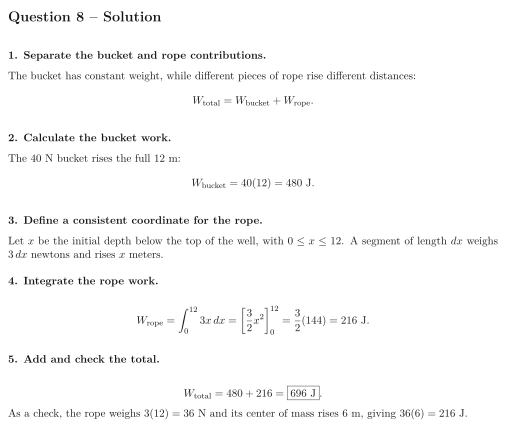
The bucket has constant weight, while different pieces of rope rise different distances:
2. Calculate the bucket work.
The N bucket rises the full m:
3. Define a consistent coordinate for the rope.
Let be the initial depth below the top of the well, with . A segment of length weighs newtons and rises meters.
4. Integrate the rope work.
5. Add and check the total.
As a check, the rope weighs N and its center of mass rises m, giving J.