Question 8
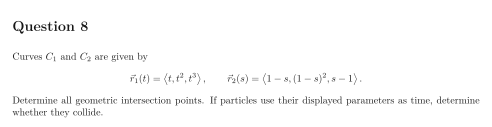
Curves and are given by Determine all geometric intersection points. If particles use their displayed parameters as time, determine whether they collide.
Show solutionHide solution
Question 8 – Solution
Strategy Geometric intersection permits ; collision requires as well as equal positions.
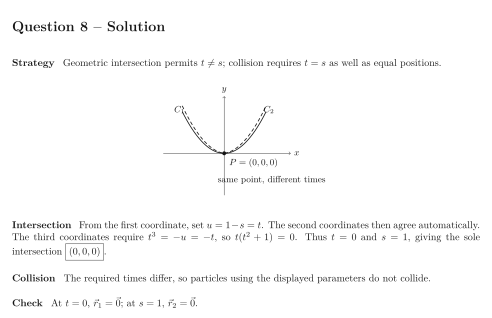
See the diagram in the original worksheet below.
Intersection From the first coordinate, set . The second coordinates then agree automatically. The third coordinates require , so . Thus and , giving the sole intersection .
Collision The required times differ, so particles using the displayed parameters do not collide.
Check At , ; at , .