Question 7
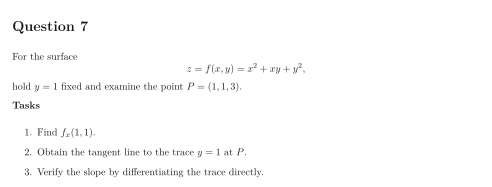
For the surface hold fixed and examine the point .
Tasks
Find .
Obtain the tangent line to the trace at .
Verify the slope by differentiating the trace directly.
Show solutionHide solution
Question 7 – Solution
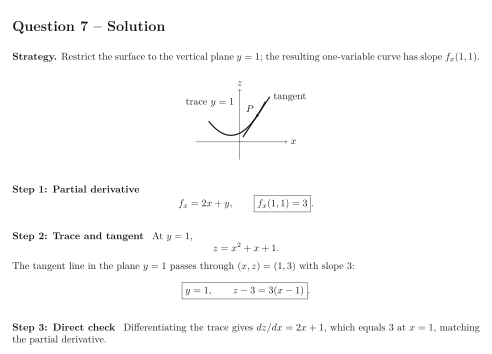
Strategy. Restrict the surface to the vertical plane ; the resulting one-variable curve has slope .
See the diagram in the original worksheet below.
Step 1: Partial derivative
Step 2: Trace and tangent At , The tangent line in the plane passes through with slope :
Step 3: Direct check Differentiating the trace gives , which equals at , matching the partial derivative.